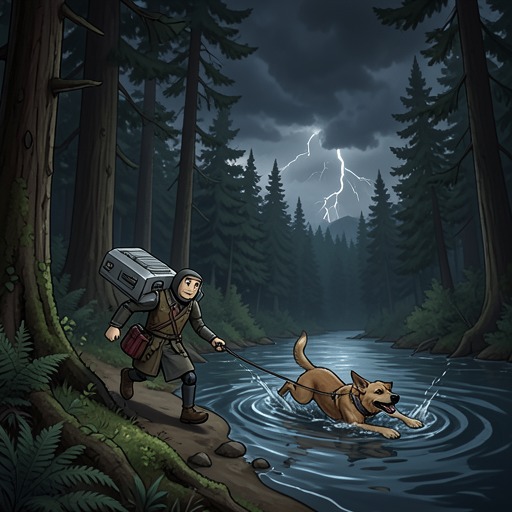
A kind deed is never lost
The Adventures of PinocchioA kind deed is never lost is both a piece of advice Pinocchio remembers from his father and a principle the story proves through action. Pinocchio’s rescue of Alidoro brings an immediate promise of reciprocity; when Alidoro later helps Pinocchio, the maxim shifts from paternal instruction to lived experience.
The Maxim Put into Action
Pinocchio hesitates before helping Alidoro, who is near death in the sea. Remembering his father’s words that a kind deed is never lost, he swims to the dog, catches him by the tail, and drags him ashore. Alidoro is too weak to stand and is swollen from swallowing salt water. Pinocchio does not linger to accept thanks: wary of trusting him too much, he throws himself back into the sea and swims away.
The exchange makes the saying more than an abstract lesson. Pinocchio acts despite his hesitation, and Alidoro recognizes the rescue as a debt of kindness. As Pinocchio departs, Alidoro thanks him for saving him from death and promises that, if the opportunity comes, he will be there for Pinocchio. The promise gives the rescue a future consequence without making Pinocchio’s act conditional on repayment.
Reciprocity Fulfilled
The principle returns when Alidoro finds Pinocchio and carries him toward the village, then lowers him softly to the ground. When Pinocchio thanks him, Alidoro answers, “You saved me once, and what is given is always returned. We are in this world to help one another.” The wording broadens the father’s maxim: kindness is not merely a favor owed between two individuals but part of a mutual responsibility to help.
The repayment is not presented as the result of a deliberate search. Alidoro explains that he had been lying on the sand, nearly dead, when the appetizing smell of fried fish drew him toward the cave; hunger led him there, and the encounter placed him in a position to help Pinocchio. The accidental route gives the return of kindness a plain, almost comic circumstance, while preserving the force of the earlier promise.
A Lesson Against Self-Will
The maxim belongs to a story in which Pinocchio repeatedly encounters advice and chooses whether to heed it. When he dismisses the Talking Cricket’s warning about the Assassins, he imagines that the danger is only a device parents use to frighten children and boasts that he can either challenge or outrun his pursuers. The rustle in the leaves cuts across that confidence. In this episode, disregard for advice exposes him to danger; in the rescue at sea, remembering his father’s words guides him toward a generous act.
After Eugene is struck and lies pale and still, Pinocchio weeps over him and admits that he should have gone to school and not listened to the boys who led him astray. He recalls the teacher’s and his mother’s warning against bad company, and recognizes his own stubbornness. These episodes do not repeat the maxim, but they sharpen its place in the book’s moral pattern: choices have consequences, and remembered guidance can shape what a character does when another person is in need.
Narrative Significance
The saying is introduced as something Pinocchio’s father had often told him, then echoed by Alidoro after the rescue. That repetition links parental instruction to reciprocal experience: Pinocchio first receives the lesson as advice, acts on it by saving a stranger, and later benefits when the stranger helps him in turn. The story’s formulation, “what is given is always returned,” does not reduce kindness to a transaction; Alidoro’s further claim that people are in the world to help one another places reciprocity within a broader ethic of mutual aid.